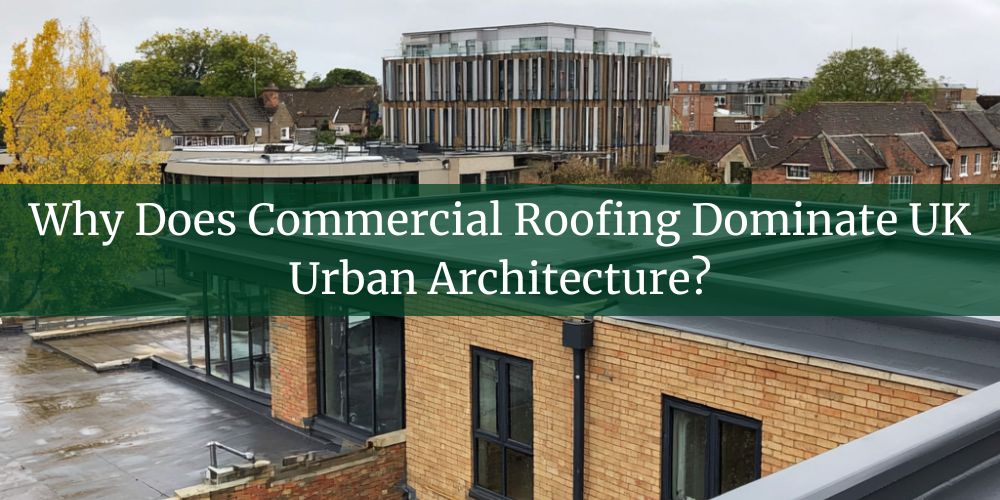
Commercial roofing dominates UK urban architecture because it offers versatile, durable, and cost-effective solutions suited to the country’s dense, weather-challenged environments. Commercial roofing plays an integral role in urban business architecture, providing not only weather protection but also contributing to the aesthetic and energy efficiency of business environments. Due to the UK's varied climate, which includes frequent rain and strong winds, commercial roofs are engineered to be highly durable, using materials such as metal, single-ply membranes, cold applied liquid, and bitumen to ensure longevity and resistance to harsh weather conditions.
There is also a growing trend of green roofing solutions in urban spaces highlights the importance of commercial roofs in promoting sustainability and environmental responsibility. The versatility of commercial roofing options allows for customisation to meet specific architectural demands and energy efficiency goals within diverse urban landscapes across the UK. With advancements in roofing technology, businesses can choose systems that support solar installations or create appealing green spaces, adding economic and environmental value. These developments make commercial roofing a critical element in the design and function of urban business areas, addressing both current needs and future sustainability challenges.
For commercial building owners and facility managers across the United Kingdom, understanding the vital role of commercial roofing in urban business architecture is indispensable for ensuring operational efficiency and long-term cost savings. In this blog, we will delve deeper into the various commercial roofing solutions available, examine their benefits and applications, and explore how they contribute to the distinct landscape of UK urban business architecture.
What Defines Commercial Roofing and Its Importance in Urban Architecture?
Commercial roofing involves specialised roofing systems designed for business and industrial buildings, playing a vital role in urban architecture by ensuring structural integrity and energy efficiency. In urban environments, these roofs must account for environmental challenges such as weather patterns, pollution, and energy demands. As cities expand, the architectural design and performance of commercial roofs become crucial for sustainability and building efficacy. Here are the primary elements that define commercial roofing and highlight its essential role in urban architecture:
- Weather Resistance: Shields against climatic variations, ensuring durability and safety.
- Energy Efficiency: Incorporates materials that reduce energy consumption and lowers operational costs.
- Structural Integrity: Provides robust support for various building materials and rooftop equipment.
- Environmental Impact: Utilises eco-friendly materials that contribute to sustainable urban development.
- Maintenance and Longevity: Designed for minimal upkeep while sustaining a lengthy service life.
1. Weather Resistance: Shields against climatic variations, ensuring durability and safety.
Weather resistance refers to a roof's ability to withstand diverse weather conditions such as rain, wind, and temperature fluctuations. Commercial roofs must be resilient against the elements typically encountered in urban environments. This resilience ensures the protection and longevity of the building structure beneath. For cities facing heavy rainfalls or strong winds, solutions like reinforced roofing membranes or impact-resistant materials are essential to prevent leaks and structural damage.
2. Energy Efficiency: Incorporates materials that reduce energy consumption and lowers operational costs.
Energy efficiency involves using roofing materials that aid in reducing the building's overall energy use. In urban architecture, commercial roofing that reflects heat and provides insulation plays a significant role in reducing urban heat islands and energy bills. Improved insulation leads to enhanced indoor comfort, decreasing the reliance on heating and cooling systems. Technologies such as cool roofing or green roofs are becoming increasingly popular, reflecting sunlight to maintain indoor temperatures and offering environmental benefits by reducing greenhouse gas emissions.
3. Structural Integrity: Provides robust support for various building materials and rooftop equipment.
Structural integrity ensures that the roof maintains its strength and stability under load. Commercial buildings often host equipment like HVAC systems on their roofs, necessitating a design that can support additional weight. Urban architecture relies on roofs that can integrate seamlessly with building systems while maintaining safety standards. Ensuring structural integrity through quality materials and engineering minimises risks associated with equipment load and enhances the overall safety of commercial premises.
4. Environmental Impact: Utilises eco-friendly materials that contribute to sustainable urban development.
Environmental impact reflects how a roof's materials and design influence the ecological footprint. Eco-friendly commercial roofs can significantly reduce the environmental burden by using materials that are sustainable or recyclable. In the context of urban growth, reducing the carbon footprint of buildings is a critical consideration. Green roofs and recycled content materials are popular choices for cities aiming to enhance biodiversity and manage stormwater while promoting sustainability in urban construction.
5. Maintenance and Longevity: Designed for minimal upkeep while sustaining a lengthy service life.
Maintenance and longevity describe a roof's ability to retain its function and appearance over time with minimal intervention. Durable commercial roofing systems reduce the frequency and cost of repairs in city environments where maintenance access can be challenging. Extended roof life is vital for the economic efficiency of urban buildings. Opting for high-quality, durable materials and incorporating regular inspections into maintenance plans ensure the roof remains in optimal condition, significantly extending its service life and reducing lifecycle costs.
Have a question about an upcoming project?
How Has Commercial Roofing Evolved in the UK Business Landscape?
Commercial roofing in the UK has evolved significantly, incorporating new technologies and materials to meet modern demands. Traditional roofing materials have been replaced or supplemented by innovative solutions enhancing energy efficiency, durability, and environmental sustainability. This evolution is driven by stricter building regulations and the need for businesses to reduce their carbon footprint and operational costs. Here is a list of key factors in the evolution of commercial roofing in the UK, ordered by importance:
- Technological Advances: Integration of cutting-edge materials and roofing technology.
- Environmental Sustainability: Increasing focus on eco-friendly roofing solutions.
- Energy Efficiency: Implementation of energy-saving roofing systems.
- Durability: Use of long-lasting materials that withstand adverse weather conditions.
- Regulatory Compliance: Adherence to stricter building regulations and standards.
1. Technological Advances: Integration of cutting-edge materials and roofing technology.
Technological advances refer to the use of innovative materials and techniques in roofing. Commercial roofing in the UK has benefited from breakthroughs in technology, enhancing both performance and efficiency. The introduction of smart roofing systems and advanced photovoltaic materials has transformed the industry. These technologies allow roofs to be more than just shelters, turning them into energy generators or systems capable of real-time monitoring of their condition, thus reducing maintenance costs and extending lifespan.
2. Environmental Sustainability: Increasing focus on eco-friendly roofing solutions.
Environmental sustainability is the practice of using materials and processes that are environmentally friendly. There's been a substantial shift towards green roofing solutions, reflecting broader societal and governmental attention to sustainability. Roofs now often feature materials that minimise environmental impact and improve the ecological footprint of commercial buildings. This includes using recycled materials and creating habitats for local wildlife, which also can improve insulation, leading to further energy savings.
3. Energy Efficiency: Implementation of energy-saving roofing systems.
Energy efficiency involves reducing the amount of energy required to run a building. The move towards energy-efficient roofing systems reflects a broader trend in the construction industry, aimed at lowering operational costs through reduced energy consumption. Materials such as cool roofs, which reflect sunlight and absorb less heat, are now commonly used. Enhanced insulation techniques also play a critical role, helping businesses to manage energy use better and comply with environmental regulations, ultimately leading to significant cost savings.
4. Durability: Use of long-lasting materials that withstand adverse weather conditions.
Durability refers to the ability of roofing materials to endure wear and tear over time. In the UK, climatic conditions necessitate the use of roofing materials that can withstand various weather extremes. Recent advancements have led to the adoption of resilient materials designed to resist wind, rain, and temperature fluctuations. This focus on durability not only enhances the longevity of roofing systems but also reduces the frequency and cost of repairs, offering substantial financial benefits for businesses over time.
5. Regulatory Compliance: Adherence to stricter building regulations and standards.
Regulatory compliance means meeting the defined standards set by government bodies. The evolution of commercial roofing in the UK has been heavily influenced by increasingly rigorous building regulations. These regulations ensure safety, performance, and environmental impact are all optimised. Compliance with these standards is not only vital for legal reasons but also reassures clients of the commitment to quality and sustainability in business practices.
What Are the Latest Trends and Innovations in Commercial Roofing Materials and Designs?
Modern commercial roofing trends focus on energy efficiency, sustainability, and advanced materials for improved durability. Recent innovations have introduced reflective roofing materials, green roofing systems, and enhanced insulation solutions. These advancements not only contribute to energy savings but also promote environmental responsibility and adapt to evolving architectural demands.
- Energy Efficiency: Utilises materials and designs that reduce energy consumption significantly.
- Sustainable Materials: Incorporates eco-friendly and recyclable components for minimal environmental impact.
- Green Roofing Systems: Integrates vegetation for energy efficiency and environmental benefits.
- Advanced Insulation: Utilises cutting-edge materials to enhance thermal performance and reduce energy costs.
- Smart Roofing Technologies: Introduces systems that monitor roof conditions and improve maintenance efficiency.
1. Energy Efficiency: Utilises materials and designs that reduce energy consumption significantly.
Energy efficiency in commercial roofing refers to using materials and techniques that lower energy usage. This trend is at the forefront of modern roofing innovations, aiming to cut down cooling and heating costs. Reflective roofing materials, such as cool roofs, deflect sunlight and reduce heat absorption. By integrating these technologies into commercial buildings, businesses can not only save on energy bills but also contribute positively to environmental conservation and carbon footprint reduction.
2. Sustainable Materials: Incorporates eco-friendly and recyclable components for minimal environmental impact.
Sustainable materials are those that are environmentally responsible and resource-efficient throughout their lifecycle. Commercial roofing has embraced materials like recycled metal, rubber, and sustainable wood, which do not deplete natural resources. This trend is motivated by increasing environmental awareness and regulatory pressures to reduce construction waste. By prioritising sustainability, roofing solutions now offer not only ecological benefits but also potential cost savings through longer lifespans and less frequent need for replacements.
3. Green Roofing Systems: Integrates vegetation for energy efficiency and environmental benefits.
Green roofing involves the use of live vegetation layers installed on building roofs. These systems improve insulation, reduce stormwater runoff, and offer a natural habitat for wildlife. They are increasingly popular in urban areas, where they can help mitigate the heat island effect. Aside from providing aesthetic and ecological advantages, green roofs can substantially enhance a building's energy performance and increase its overall value.
4. Advanced Insulation: Utilises cutting-edge materials to enhance thermal performance and reduce energy costs.
Advanced insulation materials are designed to provide superior thermal resistance, reducing unwanted heat exchange. Emerging technologies in commercial roofing include the use of insulating aerogels and spray foams, which dramatically increase energy efficiency. Enhanced insulation avoids excess energy use in maintaining climate control within buildings. This innovation is driven by the need to comply with stricter energy codes and reduce operational costs, while also improving indoor comfort for occupants.
5. Smart Roofing Technologies: Introduces systems that monitor roof conditions and improve maintenance efficiency.
Smart roofing technologies involve integrating smart sensors and IoT devices into roofing systems. These systems provide real-time data on the roof's condition, such as temperature, moisture levels, and structural integrity. As a result, building managers can perform proactive maintenance, preventing costly damage and prolonging the roof's life. Such technologies represent a significant step forward, offering enhanced control and efficiency in roof management and security, all while delivering predictive insights for better decision-making.
Commercial roofing plays a pivotal role in shaping the landscape of urban business architecture across the United Kingdom. Its importance goes beyond mere aesthetics, providing essential protection against the often unpredictable British weather while enhancing energy efficiency and reducing long-term maintenance costs. As businesses continue to evolve in bustling UK cities, the demand for innovative and sustainable commercial roofing solutions becomes even more critical. By prioritising quality roofing systems, businesses can safeguard their assets, ensuring longevity and resilience in a competitive environment. Commercial roofing is not just a necessity; it is a fundamental component of successful urban business infrastructure in the United Kingdom.
If you are interested in exploring how our expert commercial roofing solutions can benefit your business or have queries on your current roofing requirements, please get in touch with us through our contact form. Our dedicated team at Commercial Roofing Contractors is ready to provide the assistance and expertise you need to enhance and protect your commercial property effectively.