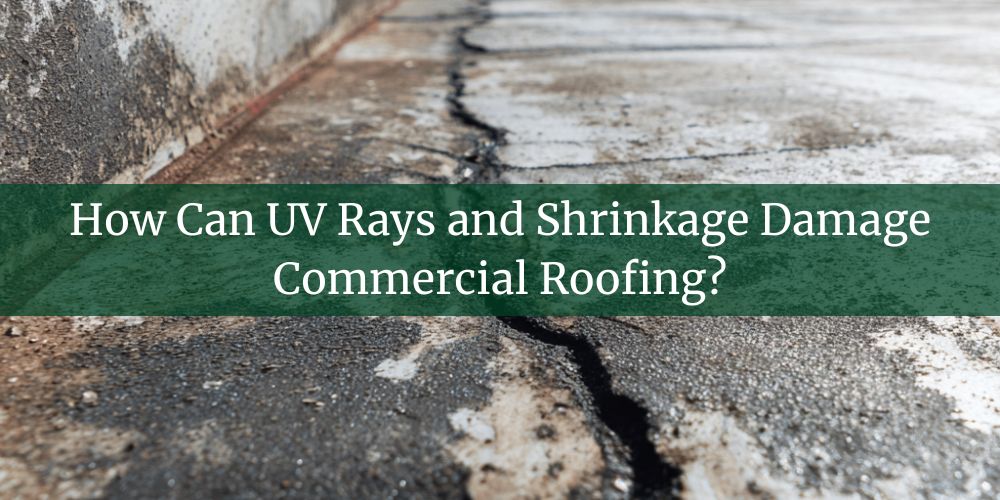
UV rays (UV degradation) and shrinkage damage present significant threats to commercial roof membranes in the UK. UV rays and shrinkage damage often leads to compromised waterproofing and increased maintenance costs. The often-overcast weather in the UK might suggest minimal UV exposure, but the accumulated impact of UV rays can still degrade roof membranes over time, causing them to become brittle and crack. Additionally, rapid temperature fluctuations contribute to membrane shrinkage, putting stress on the seams and potentially leading to leaks if not addressed promptly.
For UK commercial property owners and facility managers, addressing these threats is crucial to prolonging the lifespan of roofing systems and preventing costly repairs. In this blog, we’ll dive into how membrane shrinkage and UV degradation affect commercial roofs in the UK and discuss solutions to mitigate these risks effectively.
What Causes Membrane Shrinkage in Commercial Roofing?
Membrane shrinkage in commercial roofing is primarily caused by thermal contraction and poor installation practices. Over time, exposure to sunlight, fluctuating temperatures, and improper adhesive application can exacerbate the problem, leading to structural stress and potential roof failure. Addressing these issues from the outset is essential to ensuring the longevity and effectiveness of the roofing membrane.
The following list explores the primary causes of membrane shrinkage, each of which can significantly impact the integrity of commercial roofing systems:
- Thermal Expansion and Contraction: Continuous temperature fluctuations cause expansion and contraction.
- UV Radiation: Degrades materials, leading to weakening and shrinkage over time.
- Poor Installation Practices: Incorrect installation can pre-stress the membrane, worsening shrinkage.
- Inadequate Adhesion: Weak adhesive bonds allow for excessive membrane movement.
- Poor Maintenance: Lack of upkeep accelerates deterioration and heightens shrinkage risk.
1. Thermal Expansion and Contraction: Continuous temperature fluctuations cause expansion and contraction.
Thermal expansion and contraction are natural responses to temperature changes, which materials undergo as they are heated and cooled. For roofing membranes, these continuous cycles of expansion and contraction can lead to shrinkage over time. This process causes stress within the membrane, potentially leading to cracks and separation from the substrate, thus compromising the roof's integrity and waterproofing capabilities.
2. UV Radiation: Degrades materials, leading to weakening and shrinkage over time.
UV radiation from sunlight can directly degrade roofing materials at the molecular level. This degradation process results in the weakening of polymer chains within the membrane, causing them to lose their flexibility and become more prone to shrinkage. Over time, prolonged UV exposure accelerates the ageing process of the membrane, reducing its lifespan and effectiveness as a protective barrier.
3. Poor Installation Practices: Incorrect installation can pre-stress the membrane, worsening shrinkage.
Poor installation practices, such as inadequate tensioning during placement or incorrect seam welding, can create initial stresses within the membrane. These pre-existing stresses can exacerbate natural shrinkage processes, particularly when combined with other environmental factors such as thermal expansion. Proper installation techniques are crucial in ensuring that the membrane remains stable and performs effectively over its lifespan.
4. Inadequate Adhesion: Weak adhesive bonds allow for excessive membrane movement.
Inadequate adhesion occurs when the adhesive used to bond the membrane to the substrate is insufficient or applied incorrectly. This results in weak bonds that fail to adequately secure the membrane, allowing for excessive movement and increased vulnerability to shrinkage. Ensuring that the adhesive is applied correctly can mitigate the risk of premature shrinkage and associated issues.
5. Poor Maintenance: Lack of upkeep accelerates deterioration and heightens shrinkage risk.
Poor maintenance involves neglecting routine inspections and necessary repairs that help preserve the membrane's condition. Without regular maintenance, small issues like minor tears or loose sections can go unnoticed, becoming severe over time and increasing the risk of shrinkage. Implementing a robust maintenance programme helps identify potential problems early, ensuring the long-term health of the roofing system.
Have a question about an upcoming project?
How Does UV Degradation Affect Roof Membranes?
UV degradation weakens and discolours roof membranes, compromising their integrity and performance. Prolonged exposure to ultraviolet rays causes chemical bonds in roofing materials to break down, leading to cracks, leaks, and a reduced lifespan. Regular maintenance and UV-resistant treatments can help mitigate these issues. Understanding the specific effects of UV degradation on roof membranes ensures building owners take appropriate measures to protect their investment. Here is a list of the main ways UV degradation impacts these membranes:
- Physical Deterioration: Leads to cracks, blisters, and eventual leaks in the membrane.
- Colour Fading: Causes discolouration that may indicate deeper material damage.
- Material Weakening: Reduces tensile strength, making membranes more prone to damage.
- Thermal Expansion: Increases with UV exposure, causing further stress on the material.
- Reduced Lifespan: Accelerates wear, necessitating earlier replacement of roofing materials.
1. Physical Deterioration: Leads to cracks, blisters, and eventual leaks in the membrane.
Physical deterioration refers to the breakdown of materials due to external factors, such as UV rays. In roofing membranes, this process manifests as the formation of cracks and blisters, eventually resulting in leaks. Addressing physical deterioration promptly is essential to maintaining roof integrity and preventing costly repairs from water damage. Regular inspections can help identify early signs of deterioration, allowing for timely interventions. Protective coatings and UV-resistant materials can significantly reduce the occurrence of these issues. Selecting the right roofing system with inherent UV resistance can also contribute to the longevity of the roof.
2. Colour Fading: Causes discolouration that may indicate deeper material damage.
Colour fading occurs when UV exposure alters the pigments in roofing materials, leading to discolouration. While colour fading primarily affects the aesthetic appearance of the roof, it can also reveal underlying damage. Discolouration may serve as an early warning signal for UV-related degradation, urging property owners to investigate further. Maintaining the roof's appearance includes choosing materials with UV-stable pigments and performing regular cleaning to remove dirt and debris affecting visual quality. Addressing the root causes of colour fading ensures the aesthetic and functional longevity of the roofing system.
3. Material Weakening: Reduces tensile strength, making membranes more prone to damage.
Material weakening involves the reduction of a material's structural strength and flexibility. UV exposure can significantly weaken roof membranes by breaking down chemical bonds, ultimately reducing their tensile strength. This makes membranes more susceptible to tears and punctures under stress. Using high-quality materials that resist UV damage is crucial for maintaining the strength of the membrane. Reinforcing vulnerable areas and applying protective topcoats can also enhance the roof's resilience against weakening.
4. Thermal Expansion: Increases with UV exposure, causing further stress on the material.
Thermal expansion refers to the increase in material volume in response to heat, leading to stress and strain. In roof membranes, UV-induced heat can lead to significant thermal expansion, creating additional stress within the material. This repeated expansion and contraction weaken the roof's structural integrity over time. Integrating expansion joints and selecting materials with minimal thermal expansion coefficients can mitigate these effects. Regular monitoring for signs of stress and deformation helps address potential issues before they escalate.
5. Reduced Lifespan: Accelerates wear, necessitating earlier replacement of roofing materials.
Reduced lifespan indicates a shorter functional period for materials due to accelerated wear and tear. UV degradation significantly shortens the lifespan of roof membranes, as ongoing exposure hastens material breakdown. This often leads to premature replacement needs, adding to maintenance costs. Investing in quality materials with proven UV resistance is essential for extending the roof's life. Routine maintenance checks and supplementary protective treatments can further delay the effects of UV exposure, offering better long-term value.
What Are the Best Strategies to Mitigate These Threats?
Implementing preventative measures like regular maintenance and robust materials can effectively mitigate roofing threats. Proper planning and timely interventions are crucial to protect commercial roofs from environmental and structural threats, extending their lifespan and maintaining safety and energy efficiency. Here are the most effective strategies to mitigate threats to commercial roofing:
- Regular Maintenance: Identifies issues before they escalate to avoid costly repairs.
- Quality Materials: Ensures roof longevity and resistance to various environmental factors.
- Professional Installation: Guarantees proper fitting and maximises material performance.
- Weather-Proofing: Shields the roof from extreme weather and temperature variations.
- Energy efficiency: Utilises reflective surfaces to lower cooling costs and energy consumption.
1. Regular Maintenance: Identifies issues before they escalate to avoid costly repairs.
Regular maintenance involves routine inspections and addressing minor repairs promptly. By identifying potential problems early, maintenance prevents minor issues from developing into significant structural threats. This proactive strategy ensures long-term roof integrity and reduces unexpected expenses. Consistent check-ups include examining the roof for leaks, punctures, or missing tiles, which can encourage water ingress and accelerate deterioration. Proper drainage maintenance is also critical, as blocked gutters can lead to water pooling and eventual structural damage. Scheduling routine maintenance not only preserves the roof but can contribute to an extended lifespan and increase the overall safety of the building.
2. Quality Materials: Ensures roof longevity and resistance to various environmental factors.
Quality materials such as durable membranes and sturdy shingles offer enhanced protection and longer life. Investing in premium materials up front reduces the frequency of repairs and provides better resilience against environmental elements. High-grade materials are designed to resist UV damage, hail, and high winds, crucial for structures exposed to harsh weather patterns. Weather-resistant materials also help maintain consistent internal temperatures, contributing to energy efficiency. Choosing quality materials offers long-term savings and peace of mind, ensuring the roof withstands environmental challenges robustly.
3. Professional Installation: Guarantees proper fitting and maximises material performance.
Professional installation ensures the roof is set up correctly, optimising its design and material benefits. Improper installation can undermine even the best materials, leading to premature failure and frequent leaks. Trained professionals understand intricate roofing systems and follow the manufacturer's guidelines to ensure all components are compatible and secured. Proper installation techniques also facilitate effective drainage and ventilation systems, preventing water retention and heat buildup. Investing in skilled installation enhances roof performance and minimises the risk of future problems.
4. Weather-Proofing: Shields the roof from extreme weather and temperature variations.
Weather-proofing creates a protective barrier against the impact of changing weather conditions. It involves sealing areas susceptible to water ingress and applying coatings that resist temperature-induced damage. By reinforcing joints, flashing, and other vulnerable areas, weather-proofing significantly reduces the risk of leaks and structural damage. These measures are vital for buildings in regions prone to storms, heavy rains, or substantial temperature fluctuations. Implementing weather-proofing solutions safeguards the roof and preserves its condition, ensuring a secure environment below.
5. Energy Efficiency: Utilises reflective surfaces to lower cooling costs and energy consumption.
Energy-efficient roofing uses materials that reflect more sunlight, keeping the building cooler. This approach reduces the need for air conditioning, resulting in lower energy bills and decreasing environmental impact. Reflective coatings or roof membranes are common in commercial roofing, providing substantial energy savings by minimising heat absorption. This contributes to sustainable building practices and complies with many energy efficiency standards and regulations. Energy-efficient roofs offer a dual benefit of protecting the structure and supporting environmentally friendly practices by reducing overall energy usage.
Understanding the implications of membrane shrinkage and UV degradation is crucial for preserving the integrity and durability of commercial roofs in the United Kingdom. The unique climate conditions, characterised by fluctuating temperatures and varied weather patterns, pose significant challenges to maintaining the longevity of roofing systems. By staying informed about these common threats and taking proactive measures, businesses can ensure the resilience and performance of their commercial roofs. Selecting appropriate materials and enlisting the services of experienced commercial roofing professionals can mitigate potential risks and extend the life of your roof, protecting your investment and securing your building's future.
If you require expert advice or support regarding commercial roofing solutions in the United Kingdom, please get in touch with us through our contact form. Our knowledgeable team is ready to assist with tailored strategies to safeguard your roof against UV degradation, membrane shrinkage, and other environmental concerns.